Melting Point Apparatus - OptiMelt MPA100
MPA100
PID-controlled temperature ramping Digital movie of each melt 21 CFR Part 11 (opt.) Conforms to Pharmacopeia & GLP Automatic & visual determination
广西科米瑞实验仪器设备有限公司提供 Stanford Research Systems MPA100 产品资料、选型咨询、供货报价和售后服务支持,价格面议。
← 返回产品列表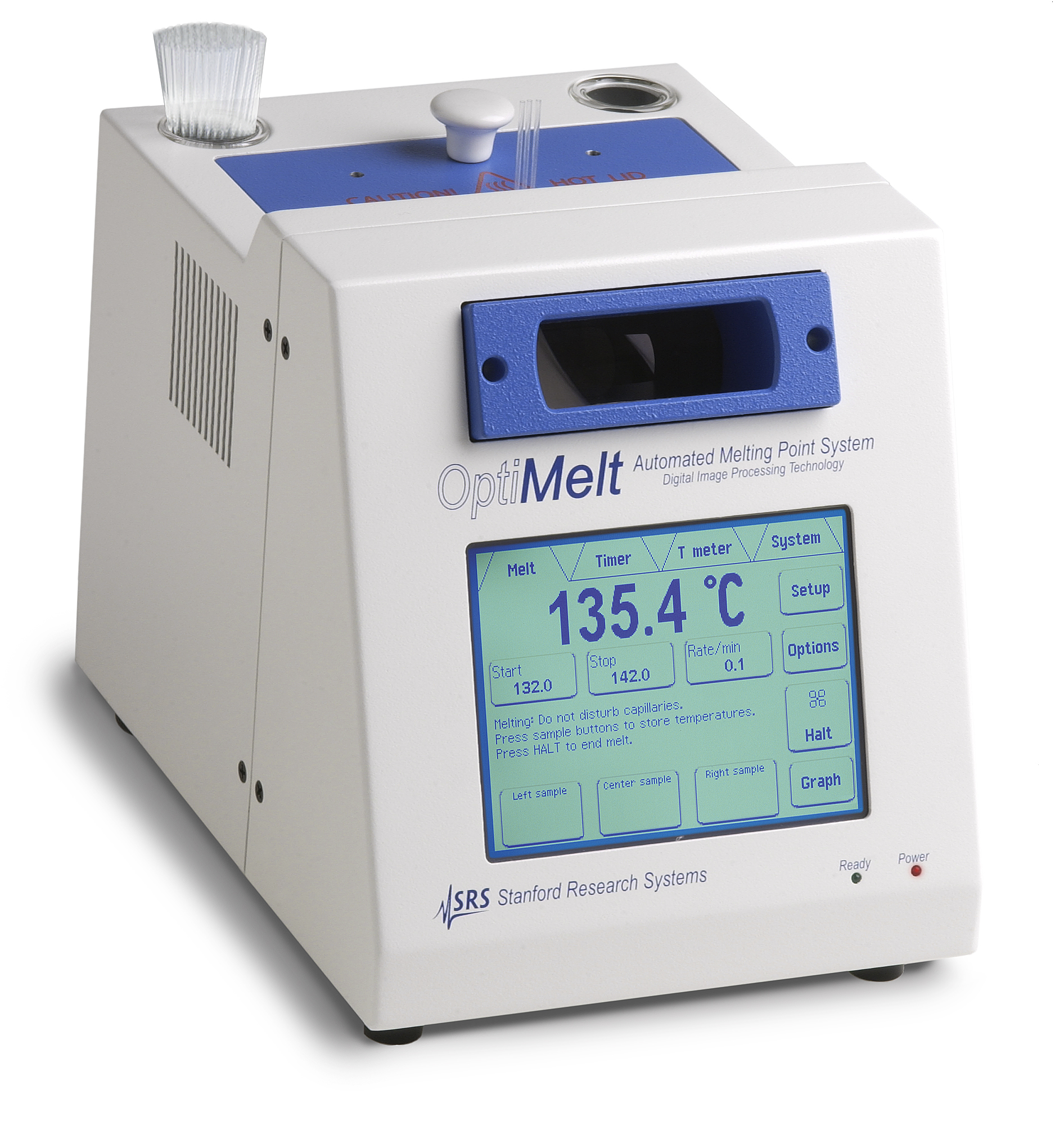
说明
PID-controlled temperature ramping Digital movie of each melt 21 CFR Part 11 (opt.) Conforms to Pharmacopeia & GLP Automatic & visual determination MPA100 Melting Point Apparatus OptiMelt provides a fast and accurate means of automatically determining the melting points and melting ranges of chemical substances. With microprocessor controlled temperature ramping, a built-in digital camera, and a selling price that is half that of competing models, OptiMelt offers the best value of any commercially available melting point apparatus. ... click for MPA100 Tech Support MPA100 Software Download Melting Point Determination IQ/OQ/PQ MSDS Phenacetin MSDS Caffeine MSDS Vanillin MPA160 Melting Point OptiMelt provides a fast and accurate means of automatically determining the melting points and melting ranges of chemical substances. With microprocessor-controlled temperature ramping, a built-in digital camera, and a selling price that is half that of competing models, OptiMelt offers the best value of any commercially available melting point apparatus. Automated Measurements OptiMelt is specifically designed for unattended operation. It has a built-in digital camera that continuously captures real-time images of the samples, and it uses digital image processing to determine results. The melting points and melting ranges are prominently displayed on the front panel and automatically recorded into memory for later review. OptiMelt has an intuitive front panel and is very easy to use. Simply select a start temperature, ramp rate, stop temperature, and hit start. Results can be easily seen from across the lab on the large LCD display. Samples can be viewed on the front panel through a removable magnification lens. During a measurement, you can flag relevant events by pressing dedicated front-panel buttons . Up to six individual temperatures can be tagged for each sample. Interactive help is available for all functions and parameters of the instrument. Text and numerical entry keypads are built into the touchscreen interface so that no external keyboard is required. Figure 1 X Figure 1 - Solid Samples MPA100 Figure 1 - Solid Samples The small, aluminum oven design, along with microprocessor-controlled temperature ramping, provides fast and repeatable warm-up and cool-down cycling . Programmable ramp rates from 0.1 °C/min to 20 °C/min, in 0.1 °C/min increments, provide measurement flexibility. The ability to rapidly preheat the oven to a start temperature slightly below an expected melting point minimizes analysis time. OptiMelt uses a platinum RTD sensor and makes temperature measurements to 400 °C with 0.1 °C resolution. It is easily calibrated in the field against certified reference standards and complies date of the last calibration which is included in all reports. Figure 2 X Figure 2 - Meniscus Point MPA100 Figure 2 - Meniscus Point OptiMelt meets modern GLP requirements for melting point determination. Up to 24 different analysis methods can be stored in memory. Eight complete melting point reports can also be saved. Records can be displayed on the front panel, printed, or transferred to a host PC via USB. Printouts include technician identification and space for a signature. Digital Image Processing The OptiMelt system is unique among melting point analyzers. It has a built-in, high-resolution digital camera to capture real-time images of the samples. It then uses digital image processing to determine phase transitions in the samples. Unattended melting points, and melting point ranges determined by OptiMelt, closely match visual results. OptiMelt's digital image processing algorithm provides a dramatic improvement over optical absorption or reflection techniques. Figure 3 X Figure 3 - Clear Point MPA100 Figure 3 - Clear Point The MeltView Window software displays live, high-resolution images of each sample during analysis. The three screen-captured images to the right were collected during a typical melt. Figure 1 shows the unmelted solid samples, figure 2 reveals the meniscus point, and figure 3 corresponds to the end of the melt (clear point). Stored images may be recalled at any time, and can be played back frame-by-frame or as a movie. SRS also offers a paid FDA 21 CFR Part 11 ready version. See separate tab above for details. Thermometer Input and Timer OptiMelt is the only melting point apparatus that can also be used as a general-purpose digital thermometer and timer. In between melting point determinations, OptiMelt may be used with a Pt RTD to measure and log temperatures around the lab. Three built-in timers are also available to keep track of timed events during experiments. MPA100 Specifications Melting point and melting point range
相关产品
提交需求
请填写必填信息,我们将在工作日尽快回复。