Melting Point Apparatus - DigiMelt MPA160
MPA160
DigiMelt is a modern, low cost, digital melting point apparatus designed specifically for the student lab. Students learn the visual detection capillary method of melting point ...
广西科米瑞实验仪器设备有限公司提供 Stanford Research Systems MPA160 产品资料、选型咨询、供货报价和售后服务支持,价格面议。
← 返回产品列表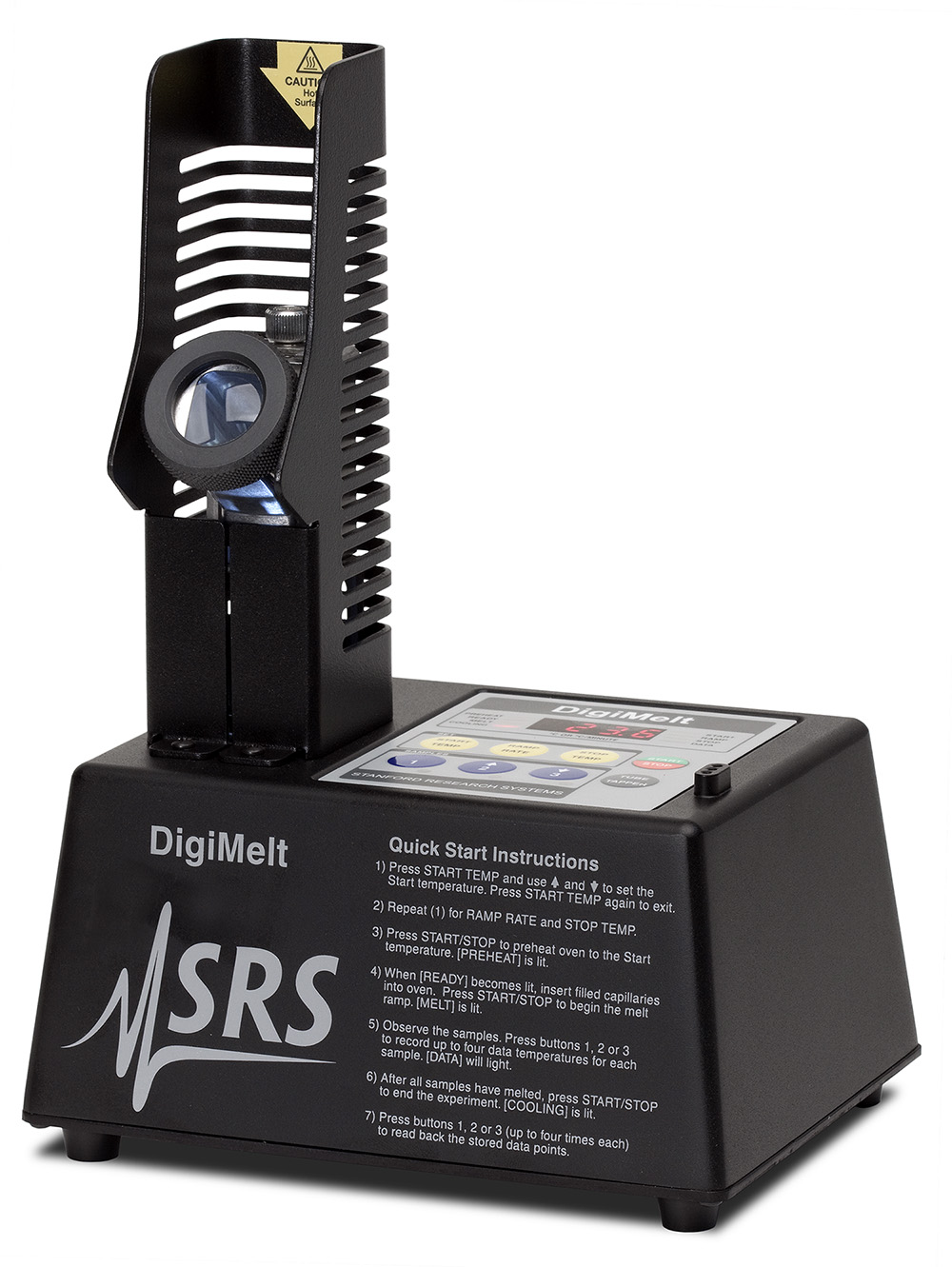
说明
DigiMelt is a modern, low cost, digital melting point apparatus designed specifically for the student lab. Students learn the visual detection capillary method of melting point determination without the frustration of trying to control the oven temperature. DigiMelt rapidly heats the oven to the programmed start temperature, then ramps at the specified rate. The student carefully observes the samples and records the melting points with a touch of a button. MPA160 Melting Point Apparatus Instructional Video MPA160 Cooling MPA100 Melting Point MPA160 & MPA161 Melting Point Apparatus Digital Temperature Readout DigiMelt incorporates a platinum resistance temperature detector (RTD) instead of the usual mercury thermometer. This means better accuracy on the readings, and no more mercury cleanup from broken thermometers. The RTD is encased inside the oven block making it virtually unbreakable. Microprocessor Temperature Control Some student instruments use a large knob that simply throttles power to the oven without any sense of what the target temperature is. DigiMelt uses an RTD for feedback, so it "knows" the oven temperature. This means the students can enter a start temperature, a ramp rate, and a stop temperature and the microprocessor takes care of the rest. Furthermore, the microprocessor can deliver variable amounts of power to the oven, so it can quickly ramp to the starting temperature, then perform the ramp as slowly as 0.5 °C/min. Click here for Cooling Temperature vs. Time graphs. Rather than forcing the student to peer through a tiny lens with poor illumination, the DigiMelt uses a large magnifier that allows plenty of eye relief. The user can see all three capillaries easily at a comfortable distance from the instrument. White LEDs are used to provide high-contrast illumination. For many students, the melting point lab is the first time they have touched a capillary. This can lead to lots of capillaries on the floor and many broken capillaries. DigiMelt employs an integral cell phone vibrator motor to let students pack their sample without tapping them on the bench or dropping them through a long glass tube. A molded guide in the chassis allows students to pack three samples at a time. Cleaning the lens is as simple as removing the lens retaining ring. If a student should break a capillary, the entire lens holder assembly slides out for easy clean up of the broken glass. Replacing thermometers is a thing of the past as the RTD will never break and cannot be removed from the instrument. Unlike conventional incandescent bulbs that must be periodically replaced in some student instruments, the white LEDs used in DigiMelt will last a lifetime. The DigiMelt uses an internal RTD thermometer, which means students and TAs are never exposed to toxic mercury vapors. Some student instruments will reach 500 °C and stay at that temperature indefinitely—a severe burn hazard. The DigiMelt's maximum temperature is 260 °C, which allows testing of virtually all organic compounds a student might examine. Intelligently designed cowling protects students from touching the hot oven. Furthermore, the oven will automatically turn off after being idle for 30 minutes. Safety Concerns in a Melting Point Lab When using a Mel-Temp When using a DigiMelt ... Handle your mercury thermometer with care. A broken thermometer leads to a mercury spill. DigiMelt does not use a mercury thermometer. Not a concern. Do not heat the Mel-Temp beyond the upper temperature limit of your thermometer. DigiMelt can not reach an unsafe temperature. Not a concern. Never insert a glass thermometer into a hot Mel-Temp. It may shatter. DigiMelt uses a solid-state temperature sensor built into the oven. Not a concern. Do not leave the Mel-Temp on after your experiment is over. Do not leave the Mel-Temp on unattended. DigiMelt will turn off when the experiment is over or after 30 minutes of inactivity. Not a concern. Do not touch the heating block while it is hot. DigiMelt's oven is shielded by a safety cowl. Not a concern. Do not place your eye on the eyepiece when the unit is hot. DigiMelt's eyepiece is designed to be viewed from a safe distance. In addition, the safety cowl prevents the user from actually placing their eye against the eyepiece. Not a concern. MPA160/161 Specifications Start, stop or ramp rate, oven temperature, and stored measurement data ±(0.45+0.0045T) where T is temperature in Centigrade Typical: ±0.6 °C (<200 °C), ±1.0 °C (≥200 °C) 0.5, 1.0, 2.0, 5.0, 10, 20 °C per minute 2.5 minutes to 100 °C, 6.5 minutes to 250 °C Automatic after 30 minutes idle 1.4 mm to 1.8 mm outside dia., 100 mm length
相关产品
提交需求
请填写必填信息,我们将在工作日尽快回复。